
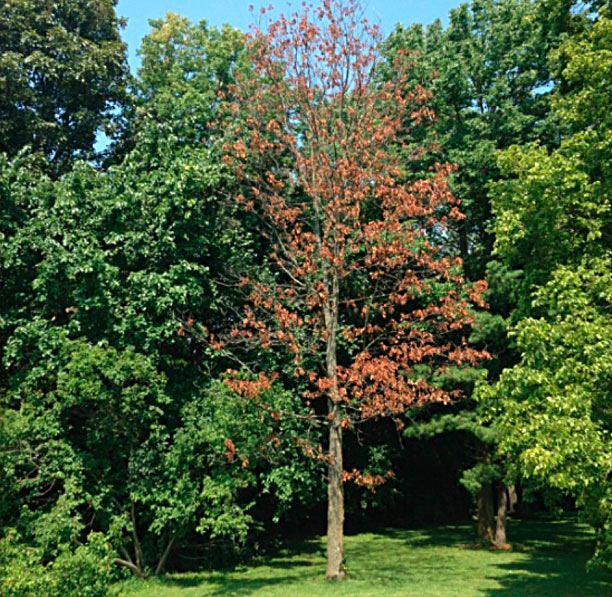
Autumn leaf coloration, along with the first frost, will indicate the end of the growing season for many gardeners and homeowners. However, woody trees and shrubs will remain active until the ground freezes later this winter. Root growth and nutrient absorption will continue through the fall, promoting healthy initial growth next spring. It is essential that the roots continue to receive adequate moisture through the fall season to:
- Allow for continued root development
- Assure roots are fully hydrated before the ground freezes to prevent winter freeze damage
- Maintain nutrients in a water soluble solution for root uptake and storage
- Reduce evergreen foliage “winter burn” damage
- Help roots recover from drought conditions many areas experienced through the late summer
Many areas received above average rainfall this spring and early summer, saturating the soil and depleting oxygen levels around the root zone of many plants. Low oxygen can lead to root rot disease and decline of the foliage of the plant. In addition to excessively wet soil in the spring, drought conditions in late summer compounded root decline problems and inhibited root recovery. While some symptoms of plant decline may be visible this fall, other symptoms may not show up until next spring as damaged roots are unable to support the top growth of trees and shrubs. Plants with root related stress are also susceptible to infection from other insect and disease problems, increasing the chances of decline or dieback next year.
Recent rainfall will help alleviate soil moisture deficits. However, some plants may be in locations that receive less rain due to neighboring trees or buildings and will still require additional irrigation to maintain root viability.
Team Buckeye
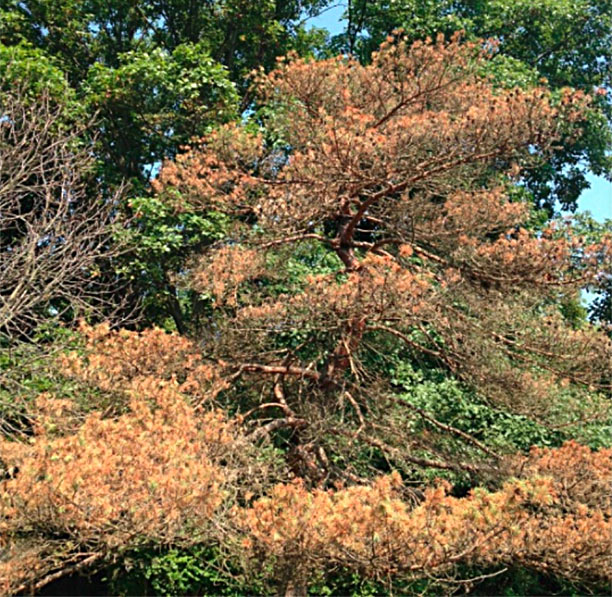
Evergreen dieback due to root decline